Monday, March 22, 2010

Module VIII


Essential Question:
How are Arctic sea-ice, climate and culture all connected?


EXPLAIN:
Sea ice provides much of the food for Native Alaskans in the Arctic. Native peoples live a subsistence lifestyle- their life depends on the cold. It is virtually impossible to hunt and get food without the sea ice that walrus, polar bear, seals, and sea birds depend on. According to the TD video, Global Warming Threatens Shishmaref, the ice conditions are changing. The sea ice used to freeze solid by the end of October, but in recent years has frozen closer to Christmas. When measured, the ice was only one foot thick when it used to measure four feet. The lack of sea ice means that the Native Alaskans have to change their hunting seasons and where they hunt. One man told of having to change the walrus hunts. Where there used to be many boats that would come back with an animal, the last year there was only one.

EXTEND:
The Alaska Native Science Commission profiles projects on Avian Bird Flu, Arctic Contaminants, Climate Change, Traditional Foods, and other projects. They also appear to have a database of many Alaska Native scientific studies.

EVALUATE:
Using indigenous information sources regarding changing sea ice is priceless. The TD video How the Arctic Ecosystem Might Change gave some clues to how melting sea ice might impact the environment of Alaska and other Arctic areas. Ice holds life together in the fragile Arctic ecosystem. Much of the megafauna of the area- polar bears, whales, seals, and walrus- are unique to the environment and very susceptible to changing climate. If the sea ice continues melting, there will be no environment for these animals and they will be replaced with other animals from the Atlantic or Pacific. This means the subsistence lifestyle for Arctic peoples will have to change as well. By listening to village elders about the new species being introduced, like those Roger Kutana mentioned in Arctic Climate Systems, scientists can begin to see the impact of the changes in the Arctic climate. This ranges from new insects to the possible release of a large "burp" of carbon dioxide and methane as Arctic permafrost begins to melt.

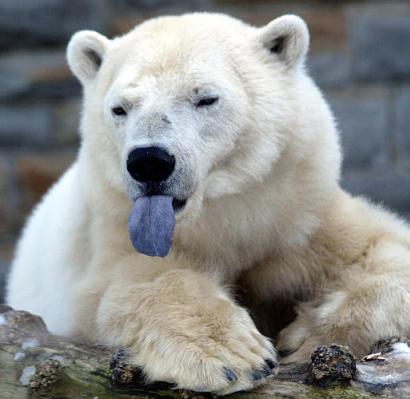
Photo from: Ugle Walrus.

Wednesday, March 17, 2010

Module VII


How is Earth's climate connected to its geological, biological and cultural systems?

EXPLAIN:
The Earth naturally stores carbon in variety of ways. These include the oceans and vegetation. I was surprised to learn that the oceans could actually store more carbon than the atmosphere. Plants, of course, use carbon for photosynthesis and store the element in their tissues. Usually, when plants and animals die they release carbon, but coal and other fossil fuels are caches of organisms that didn't release their carbon upon death. In the short term that's been useful for humans, but with consequences to climate change we never imagined.

I do have to wonder at some of the suggestions for catching carbon in the TD Carbon Cycle Diagram. It seems to me that spreading iron on the oceans' surfaces to encourage plankton to eat CO2 doesn't seem wise and would have a small payoff since the plankton can't consume that much. Wouldn't the iron just pollute the oceans as well? And couldn't that trapped CO2 raise the acidity level of the oceans even higher? That is the same concern I have with injecting CO2 into the deep ocean. We don't know much about the deep oceans so we probably don't want to go messing with it.

EXTEND:
I have lived in Alaska since 1985 and in that time have seen plenty of evidence of climate change firsthand. If one travels to Exit Glacier, it is possible to see the Park Service signs labeling how far the glacier used to stretch. In recent years it has retreated at a much faster rate. You used to be able to almost touch the glacier from the restricted area, but now it's quite a way's away. There also used to be some beautiful blue glacial pools that have dried up.

Spring also seems to come quicker. It used to be that break-up would occur in April. This year it seems to have started in February. We typically have multiple break-ups because the weather is warmer than it used to be. There are different insects, such as grasshoppers, and extreme weather we rarely used to experience. I've seen more thunderstorms in the last five years than I can count and I heard reports of a tornado a year or two ago.

EVALUATE:
There are definite benefits of "shining two lights on the same path" when it comes to studying carbon-based industrialization and the TD videos do a great job demonstrating that. Western scientists can use the knowledge of Native Alaskans and Canada's First Peoples to supplement their research because the Natives live in an area year round and acquire much more information than a scientist can with their limited field time.

For example, in the TD video Inuit Observations of Climate Change, women are able to tell researchers about the state of animals that year as compared to prior years because it is the women who are doing the butchering. On the same token, the men tell scientists the sea ice used to be solid in February, but now is still broken at that time of year. The Natives have also had to adapt their hunting strategies because of weather changes. One man commented that when he reported thunderstorms in Sachs Harbor, he was told that wasn't possible because it was too cold there. When I was little, I remember only one or two thunderstorms in the Anchorage area. Now we have them every year. They also mentioned in the video that there are different insects present in Sachs Harbor. I was floored last year to find grasshoppers in my yard. I have never seen grasshoppers in Southcentral Alaska. The climate is definitely changing.

Image from Heritage & History.

Wednesday, March 3, 2010

Module VI


How are the Earth, atmosphere and cultures all connected?

EXPLAIN:
Dangerous pollutants accumulate in the Arctic due to the fact that cold air sinks. I know this even from my own house- if both thermostat zones are set to the identical temperature, the upstairs will inevitably be a couple degrees warmer. Unfortunately for the Arctic, this means that once pollutants find their way North, they will become trapped. High pressure and low pressure systems catch the pollutants from Asia and Europe and pull them into the Arctic. In the video Arctic Haze, an Alaskan Native elder reports that the sky used to be blue, but now is white. I live on the top of a mountain in Eagle River with a view of Anchorage and can attest to the fact that often in the winter a dull brown haze hangs over much of Alaska's biggest city, unfortunately the victim of the world's industry.

EXTEND:
The video Contaminants in the Arctic Food Chain points out that herbiverous animals at the bottom or middle of the food chain tend to have low levels of PCB's. However, those animals at the top of the food chain have much higher levels. This is the result of PCB accumulation in fat. When carnivores, like polar bears, eat animals like caribou, they ingest the PCB's. This adds to the PCB's already in their body from the environment.

Because human breast milk is extremely high in fat, this would mean that infants breastfed in populations with high PCB levels would ingest large doses of the contaminants from their mother's breast milk. I would be interested to see a study on infant health with babies breastfed in a control environment, those with high levels of PCB's and babies fed on formula. I like to think breastfeeding would still be more beneficial than formula, regardless of the PCB levels.

EVALUATE:
I honestly can't guess what the responsibilities of industrial nations contributing to Arctic pollution should be. I know that often in the Anchorage area we are told the haze is due to pollutants from China, and sometimes Russia. My thought is that this would be extremely hard to prove to demand restitution from those countries. Perhaps a better idea would be to make clean energy more profitable and encourage those countries to make the transition from fossil fuel based industries to wind, solar, and geothermal power. However, as America has yet to make that transition, it would be hypocritical of us to expect it of others.

And now for the awards!

BEST DESIGN: Dave's Explore Alaska Blog
BEST LINKS: Geo Integrations
BEST WRITING: Life in Alaska

Image from River Daughter.

Friday, February 26, 2010

Module V


How are climate, cultures and oceans all connected?

EXPLAIN:
Cultures are dictated by their environment. According to Clay's intro to this module, 50% of all people live within a 50 miles of a coast. These people will lead radically different lives than people who are landlocked. This would have been especially true before the modern era. Oceans provided the bulk of food for the subsistence lifestyle of Alaskan Natives. The Inuit utilized whale and seal, the Aleuts the sea birds and sea lions, and the Athabaskans and Tlingits the salmon.

Climate also dictates culture. Due to the differences between the equatorial seasons and light absorption, I'm not going to be wearing shorts and tank tops as often as someone who lives in Costa Rica. The summer season in Alaska is much shorter, dictating the necessity for warmer clothing, housing, and food storage.

EXTEND:
The cultural resources present in Southcentral Alaska include salmon in rivers like the Susitna and Russian, clamming, and various terrestrial animals, like moose, brown and black bears. I like to think life in Southcentral is much easier than life in much of the rest of Alaska. I don't think I could handle 50 degrees below zero like Fairbanks or even colder up on the North Slope.

However, after talking to several Alaskans, including some that have been here since the 1964 earthquake, I do think there have been serious climate changes in Alaska over the last 50 years. There is evidence of that in the coastal erosion of Western Alaskan villages, the lack of sea ice up North, and the melting of permafrost in Interior Alaska. There are also mysterious changes in sea animal populations- a decrease in King salmon, beluga whales in Cook Inlet, and sea otters in the Southeast. The video Warmer Oceans Affect Food Web discussed the decrease of sea birds (like kittiwakes) and sea lions due to the lack of food availability, especially little tiny food fish. This could be due to the changes in temperature in the ocean, a warming period that started in the 70's.

EVALUATE:
I wasn't sure how ocean systems and thermal energy would relate to Alaska's cultures until I watched the video on Dolly Garza. Then it all became crystal clear. Thank goodness for Teacher's Domain!

Alaska Natives are often the only group of people able to utilize a particular animal for subsistence hunting. This is true of sea otters and whaling. It would be critical for Alaska Natives to monitor the health of the ocean and animal population to ensure that this resources is available for future generations. In her interview, Garza stated that, "Alaska Natives need to be kept at the forefront of policies and resources allocation... to protect historic uses." It is important to have Native Alaskans working as biologists for the state and Native corporations to ensure that their interests are being represented. If salmon, otter, or whale populations decrease, as many have in recent years, it's critical to find the reason why. Then, if human involvement is the culprit, those issues need to be addressed and remedied. Otherwise, the subsistence lifestyle of Alaskan Natives is at danger.

Photo from Environment News Service

Tuesday, February 16, 2010

Module IV


Essential Question: How do stories of cataclysmic events help inform students about geosciences and cultures?

Explain: It is one thing to explain to students about the Richter scale or P and S waves when teaching about earthquakes. It is makes a much bigger impact to show a video or a survivor account of the Alaskan 1964 earthquake. Alaska is in a unique position of having experienced many cataclysmic events in recent history- earthquakes, tsunamis, and volcanoes- that can bring the geology alive to students.

Reading about them in textbook is no where near as powerful as learning about the destruction that happened to your home firsthand. I know I'll always remember reading in my 7th grade social studies class about a kid during the '64 earthquake who jumped up in his living room while the ground was shaking and landed in the opposite corner of the room. Going for a walk in Earthquake Park also had new meaning. Whereas before it was just a fun place to ski, after learning about the earthquake it became a lesson in geology and the people who had lived there. After that I became interested in learning about bootleggers clay and how Alaskans have learned to build around our earthquake, permafrost, tsunami, and volcano ridden landscape.

Extend: Cultures are definitely shaped by stories of cataclysmic events. One of the best known myths regarding volcanoes, the goddess Pele was worshipped as the Hawaiian goddess of fire. I have traveled to Italy several times and stood in awe of the power of Mt. Vesuvius. To walk down the empty streets of Pompeii and Herculaneum is truly awe-inspiring. The volcano itself was thought to be sacred to the hero Hercules. The culture of those resort towns was destroyed- people had to move and carried the stories of the eruptions with them. Pliny the Younger is responsible for writing numerous primary source letters recording the 79A.D. eruption for posterity.

Evaluate: Teaching students about cataclysmic events is extremely important. First, they help teach students about the geological occurrences that impact their environment. When students in Alaska go to Seward and hear the noon tsunami drills and see the tsunami evacuation route signs, they understand why such precautions are necessary. However, students should also be aware of the phenomena that impact other places on Earth. I remember hearing a story of a little girl in Thailand during the 2004 Christmas Tsunami who was present on the beach during the surge of water out to sea before the water broke on land. She had just learned about tsunamis in school and screamed, "Tsunami!" Due to her warning, the people on the beach had several extra seconds to make it off the beach. As stated in the module, everyone experiences a geological event sometime and it is important that we understand them.

----------
Photo of Herculaneum.

Thursday, February 11, 2010

Module III

Essential Question: How are landscapes formed and how, in turn, are cultures shaped by their landscapes?

Explain: Landscapes are formed by a variety of different factors. In Alaska, much of our environment is the result of plate tectonics. The stress of the North American and Pacific plates has resulted in our growing mountain ranges and created Denali and Mt. St. Elias. Plate tectonics also cause earthquakes, like the 1964 Good Friday quake, in addition to forming our various volcanoes on the Ring of Fire. Landscapes are also formed by other factors such as glaciers and rivers.

Cultures are shaped by their landscape because this dictates how they will survive. Living on the Arctic North Slope is very different from living along the Yukon River. For those Native Alaskans living on the Yukon, fish is the key to survival. I found it interesting to learn from the video, "On the Yukon River" that the word for food for those Natives is the same as the word for fish. Life would be very different for those groups if they didn't have salmon for subsistence.

Extend:
I've heard it said that Native Alaskans have a hundred words for snow. I'm not sure if this is accurate, but the idea does go to show that a people's environment will dictate it's culture. In "On the Yukon River," the elder stated that the purpose of the cotton blowing on the wind was to tell everyone that the salmon are coming. To me, it's a sign that I need to go to the store for some anti-allergy medicine. I never would have tied the cotton to the arrival of the Chinooks because I don't subsistence fish for a living. To me, the cottonwood tell me that there's plenty of fresh strawberries and tomatoes on their way from my garden.

Evaluate:
Native Alaskan values in regard to the land are very valuable, especially in this day of reduce, reuse, recycle. In "Living from Land and Sea," it was very apparent that nothing is wasted. There is honor and respect for the land, sea, and animals. This is something that is present in all Native American and First People groups, but a trait that was lacking in the white, Western settlers as they attempted to fulfill Manifest Destiny. I am thankful that Americans like Theodore Roosevelt were able to look at a map of America 100 years ago and realize that if they didn't protect certain places, we would lose much of our natural landscape. America became the first country with national parks and as such, we've saved places like Denali, Yosemite, and the Grand Canyon, not to mention countless species of plants and animals.

We are now in an era of land management, something that is critical for Native Alaskans and First People. I know non-Native Alaskans who gripe about the restrictions placed on them for fish wheels, dip-netting, etc., but these rules are necessary to protect the subsistence rights of Native Alaskans. Their culture was formed by this landscape, whereas white Americans have attempted to force their culture on Alaska. I like to think both can live together.

Monday, February 1, 2010

Module II, Part II

Essential Question: How is everything connected from the perspectives of indigenous peoples and Western scientists? What are the advantages to knowing both ways?


Explain: Scientific views differ between Native Alaskan and Western perspectives. What I find most interesting is that the West tends to be skeptical of every new theory. Plate tectonics and evolution are widely accepted, but it took a long time for people to come around to the new ideas. On the flip side, Native Alaskans use a long tradition of oral history. Whenever I mention oral histories in class, the first thing students point out is that those can change over time, like a game of telephone. Of course, my school has a very low percentage of Native Alaskan students so my classes have a very Western perspective.

One thing I found interesting when teaching the culture unit in Alaska Studies is how analytical my students are. They have a hard time wrapping their minds around a Native mindset. I use an analogy with a salmon in addition to some videos interviewing Native elders to help them understand. If a Westerner were to catch a salmon, they would immediately need to put a number on it. How much did the fish weigh? How long was it? Does it place in any fishing competitions? They would possibly write this down, especially if it were a large fish. On the other hand, a traditional Native Alaskan catching the fish would be more interested in how the fish came to be there and the overall importance of the fish. Who is the fish going to feed? How was the fish caught?

Interestingly enough, both these perspectives use empirical evidence, usually in a rural setting. They also seek to add to a body of knowledge, just in very different ways.

Extend: How do Native people define traditional knowledge?

  • It is practical common sense based on teachings and experiences passed on from generation to generation.

  • It is knowing the country. It covers knowledge of the environment - snow, ice, weather, resources - and the relationships between things.

  • It is holistic. It cannot be compartmentalized and cannot be separated from the people who hold it. It is rooted in the spiritual health, culture and language of the people. It is a way of life.

  • Traditional knowledge is an authority system. It sets out the rules governing the use of resources - respect, an obligation to share. It is dynamic, cumulative and stable. It is truth.

  • Traditional knowledge is a way of life -wisdom is using traditional knowledge in good ways. It is using the heart and the head together. It comes from the spirit in order to survive.

  • It gives credibility to the people.

Taken from Alaska Native Science Commission.

As I read this, I immediately started comparing this to the Western perspective of science. In some ways they are very different, but in other ways they're very similar.

1. Western science passes its teachings from generation to generation. We go to college and learn from professors who practice and publish in their field. We learn from textbooks and journals written by scientists.

2. Western learning is less holistic and environmentally oriented. We break things apart by subject, time, and area. As a history teacher, I wish I could take students to where the history happened, to the environment that it occurred in. I would imagine it would be the same for science teachers. Wouldn't it be awesome to be able to demonstrate the power of glaciers standing on Turnagain Arm? Then you could tie all sorts of other topics in- rock glaciers, mud flats, tidal exchange, and so on.

3. I think Western knowledge is dynamic and stable. It is constantly changing, but certain theories become accepted as truth. Sometimes it takes a long time for this to happen- plate tectonics, evolution, and Galileo's theory that the earth orbits the sun were all dismissed as frauds in their early days. We know we don't know everything yet, but are seeking to learn more.

4. Western knowledge relies mainly on the head, not the heart. Having lived in Alaska since 1985, I think there is a definite attempt to bring traditional values into the schools, especially, but much of this doesn't reach the main populace. I also think our Western science is still feeling the effects of separating from the Church. For so long Westerners were told just to believe and now the pendulum has swung the other way. We question everything. Only once your theory has been proven and you have made a name for yourself are you given credibility.

Evaluate: Having watched the UAA video on Chevak, it's obvious how valuable Native knowledge is. (Side note: I had no idea igloos were so warm children could play naked in them. I had always thought igloos were used as temporary hunting shelters.) I know if it came down to it and I was forced to live off the land in Western Alaska I would die in just a few days. I also liked the opening paragraphs of the ANSC page with the story of the polar bear hunter. I'm not sure it would occur to a Western hunter to act like a seal to lure the bear, but that was probably an innate thought for a Native hunter. It seems to me that the best view of science in Alaska is one that takes into account both the Native and Western views. They both have strengths and weaknesses, but together they could certainly provide a much clearer picture on any scientific phenomena.